

Our Story: Behind AINOTE and iFLYTEK
Ideas in focus. Work in motion.
AINOTE was born in the age of AI. We built it to bring your handwriting and AI together — so the busywork takes care of itself, and you're left with more room to think.
We still believe in handwriting.
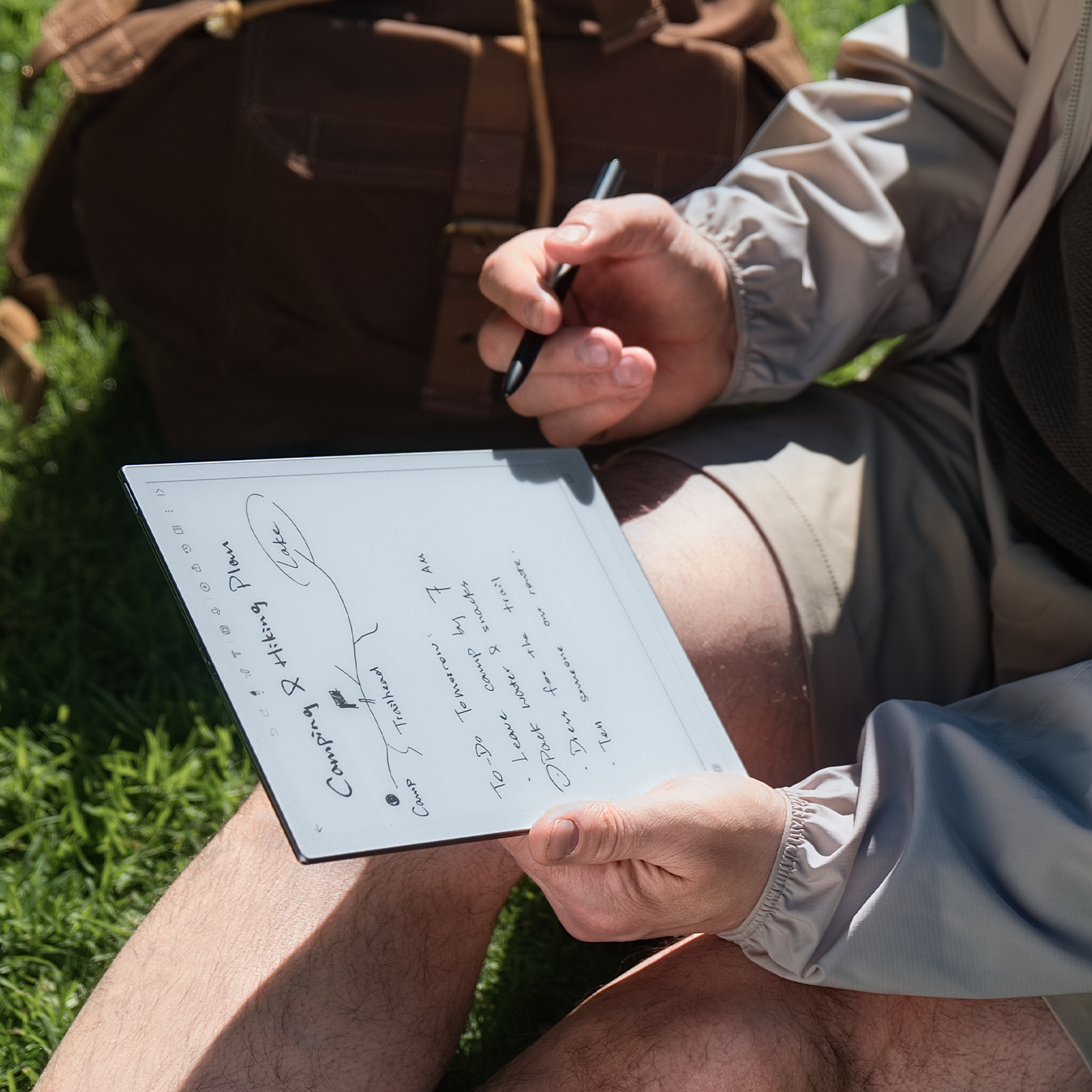
It calms the mind and sharpens thinking the way typing never will. For most of history, pen and paper were how we did it. But paper has limits. It can't keep up with a fast conversation, and what you write gets buried or fades with time.
So many of us moved on — to iPads, to e-ink tablets. They helped. We could finally store everything. But storing isn't remembering. Our notes still pile up — captured and then forgotten.
We wanted to keep what's good about writing by hand — and fix what it never could.
More than a notebook.
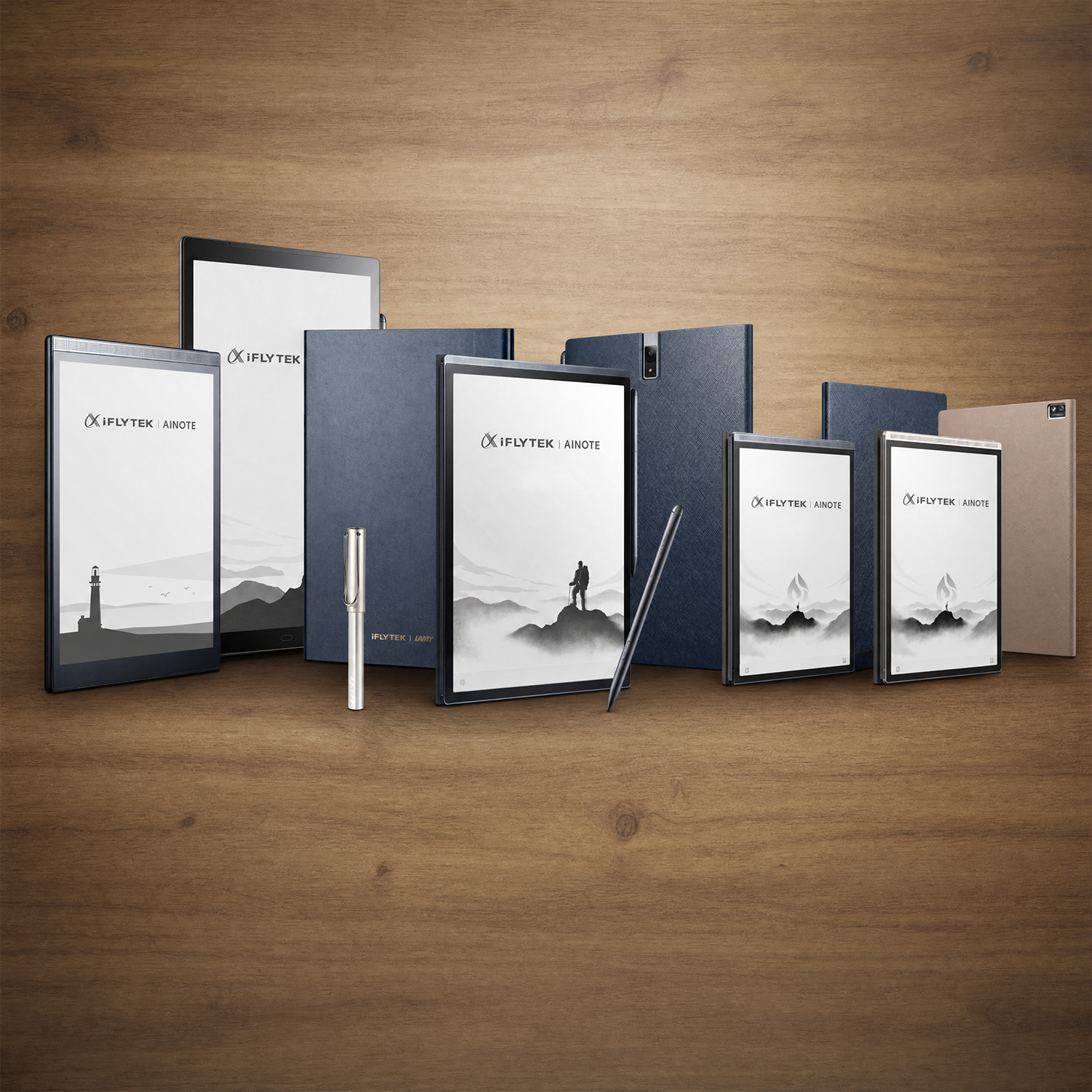
We didn't want to give up writing by hand — but we were tired of losing what we wrote.
So we kept asking: why can't a notebook be easy to write in — and just as easy to search? That question became AINOTE.
We shipped our first one in 2018. Fifteen products and 3+ million global users later, we're still chasing it.
One half is the writing — it's why AINOTE 2 comes in at 4.2mm and 295 grams, light enough to disappear in your hand, so nothing stands between you and the page.
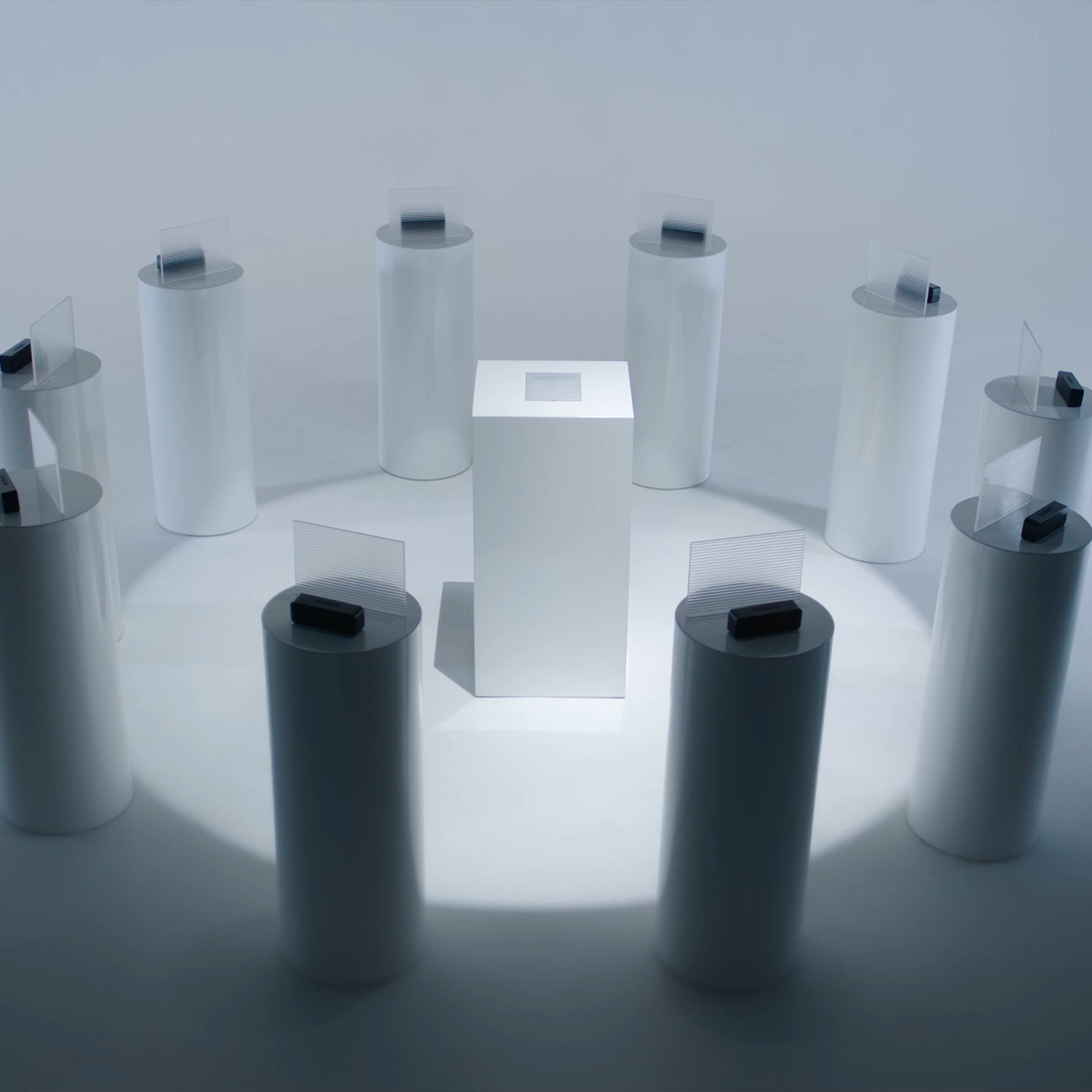
The other half is AI.
It turns your handwriting into words you can search, hears what's said across languages, and keeps what you capture in order — so nothing you write is lost again.
Behind it, iFLYTEK has spent 25 years on one hard problem: teaching machines to understand human speech.
We didn't want to give up writing by hand — but we were tired of losing what we wrote.
So we kept asking: why can't a notebook be easy to write in — and just as easy to search? That question became AINOTE.
We shipped our first one in 2018. Fifteen products and 3+ million global users later, we're still chasing it.
One half is the writing — it's why AINOTE 2 comes in at 4.2mm and 295 grams, light enough to disappear in your hand, so nothing stands between you and the page.
The other half is AI.
It turns your handwriting into words you can search, hears what's said across languages, and keeps what you capture in order — so nothing you write is lost again.
Behind it, iFLYTEK has spent 25 years on one hard problem: teaching machines to understand human speech.
We're never quite done.
Getting the two to work as one takes years — and we're still not finished.
To make writing feel real, we studied more than a hundred rollerball pens under a magnifying glass: how the ink pooled when you pressed, thinned when you rushed, caught when you tilted the nib.
To keep the body thin without losing battery, we developed our own — 2.15mm, two weeks on a charge. For the frame, we used the same material as a Mars rover. None of it is something you'll notice while you write. That's exactly the point.
And we don't do it alone. Before AINOTE 2 shipped, we put early units in the hands of nearly a hundred people around the world — managers and professionals in education, tech, and finance — and asked them to be honest. They sent back 458 things to improve. We worked through them.
We're still listening. The next one is already taking shape — the same way every AINOTE has: with the people who use it.


The Page is Yours.
All that care — the pens, the frame, the 458 things we're asked to fix — comes down to one idea: your attention stays where it matters. AINOTE takes the busywork — the transcribing, the summarizing, the sorting, the parts that used to eat your evenings. You write by hand. You keep the thinking. AINOTE does the rest.
That was the whole point. Not a machine that thinks for you, but a place where your thinking and real intelligence meet — handwriting on top, AI underneath; there to keep up with you, never to speak for you. Ideas in focus. Work in motion. That is AINOTE.

For thousands of years, a page held what mattered to one person — and then let it slip. We built one that keeps up and never forgets, and we built it for you. What you make on it has no limit. That part was always yours.